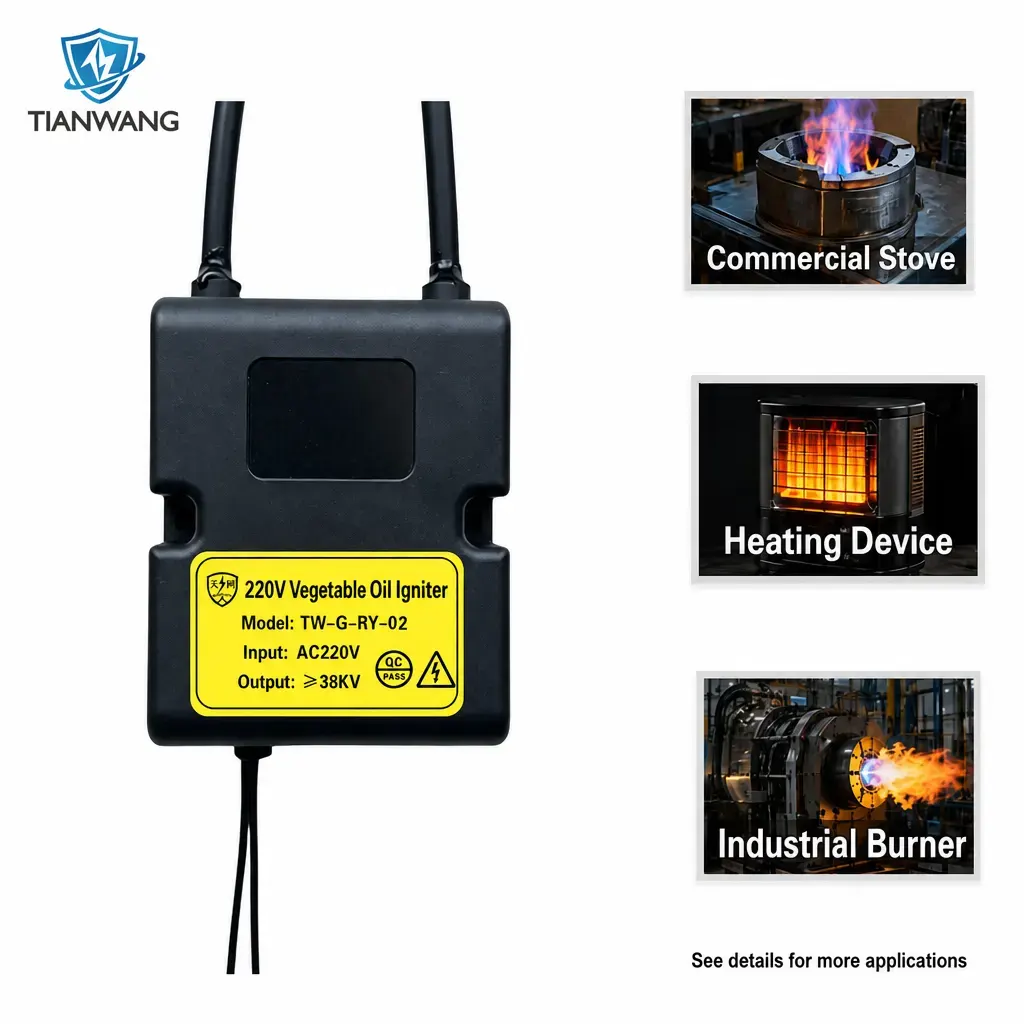
Diesel Burner Igniter Overview
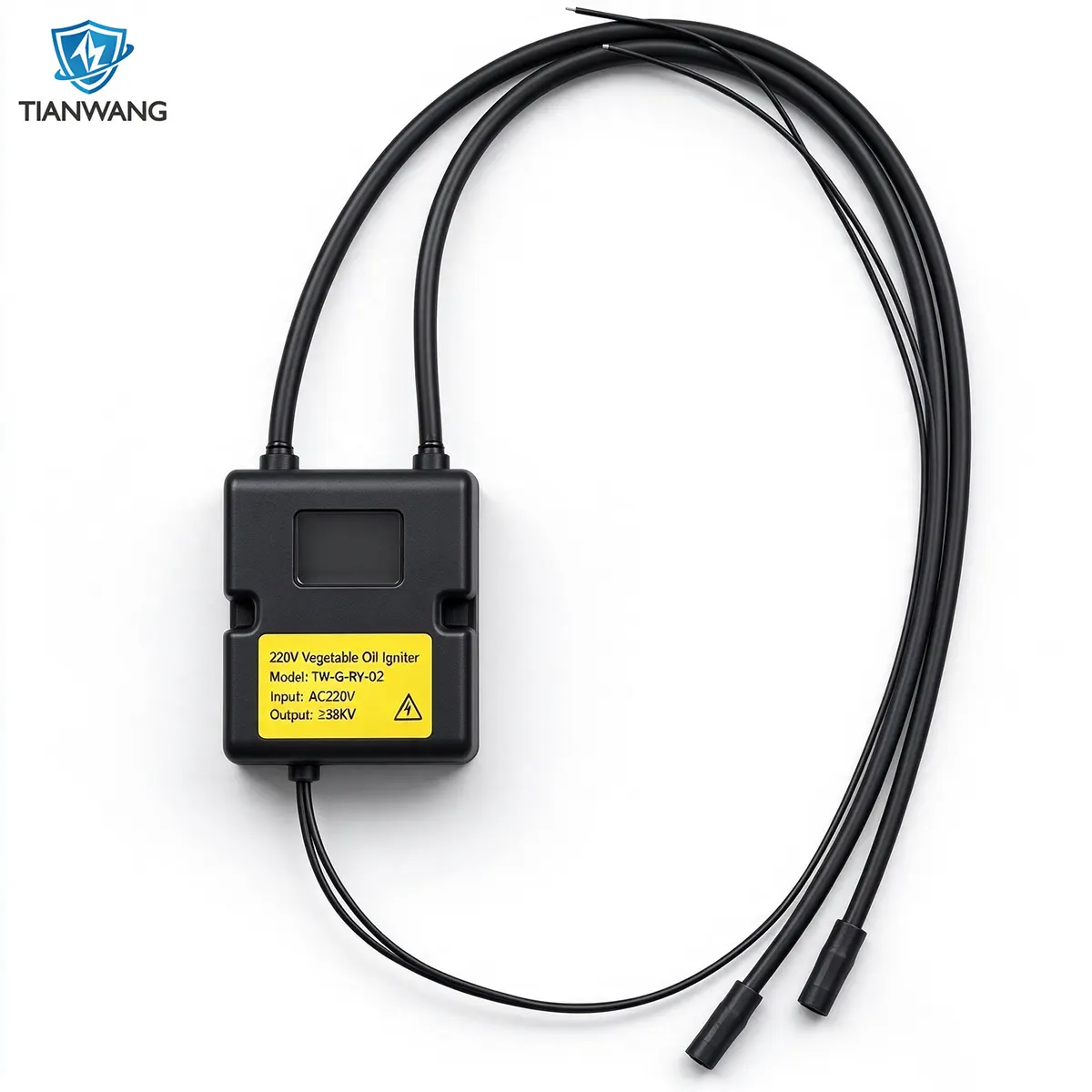
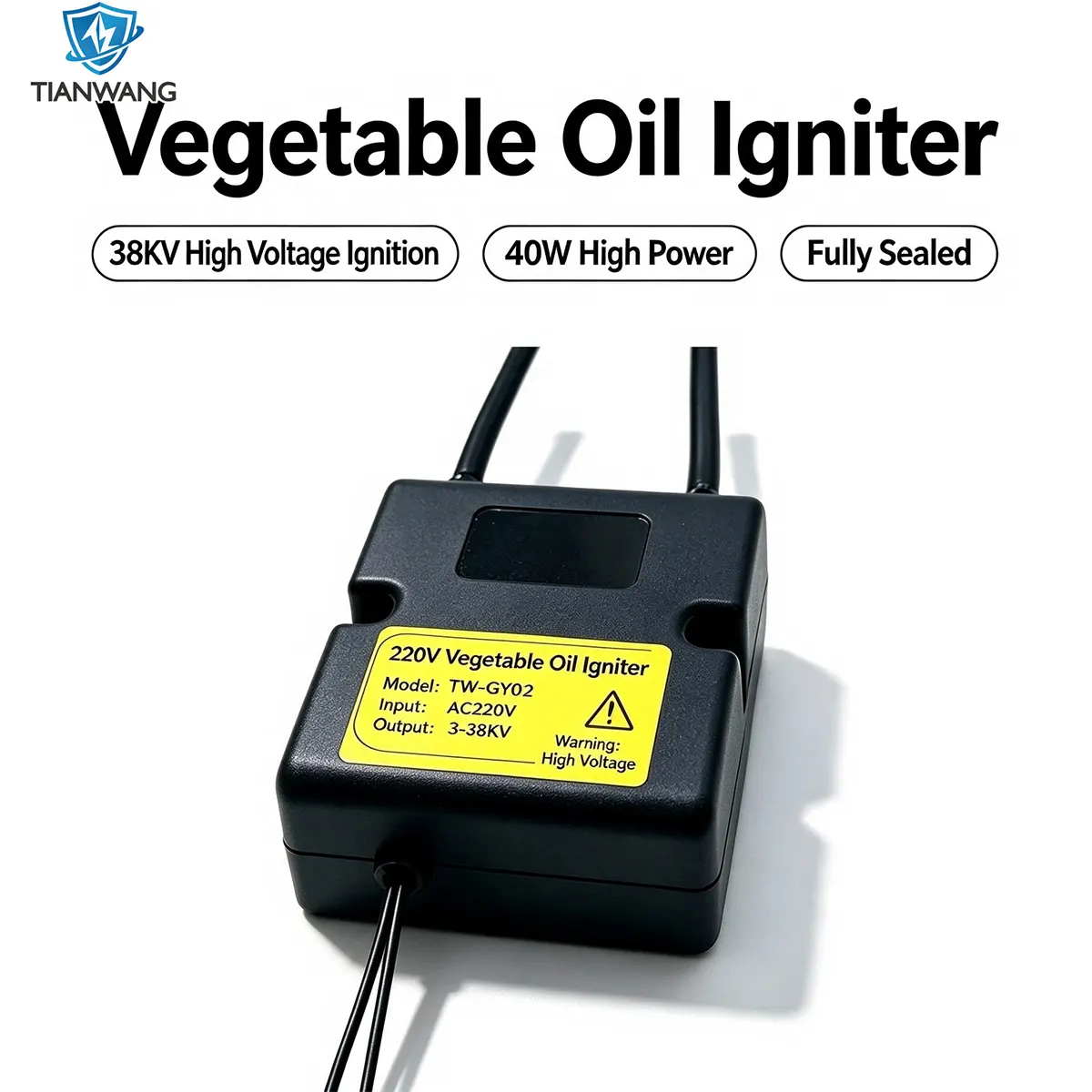
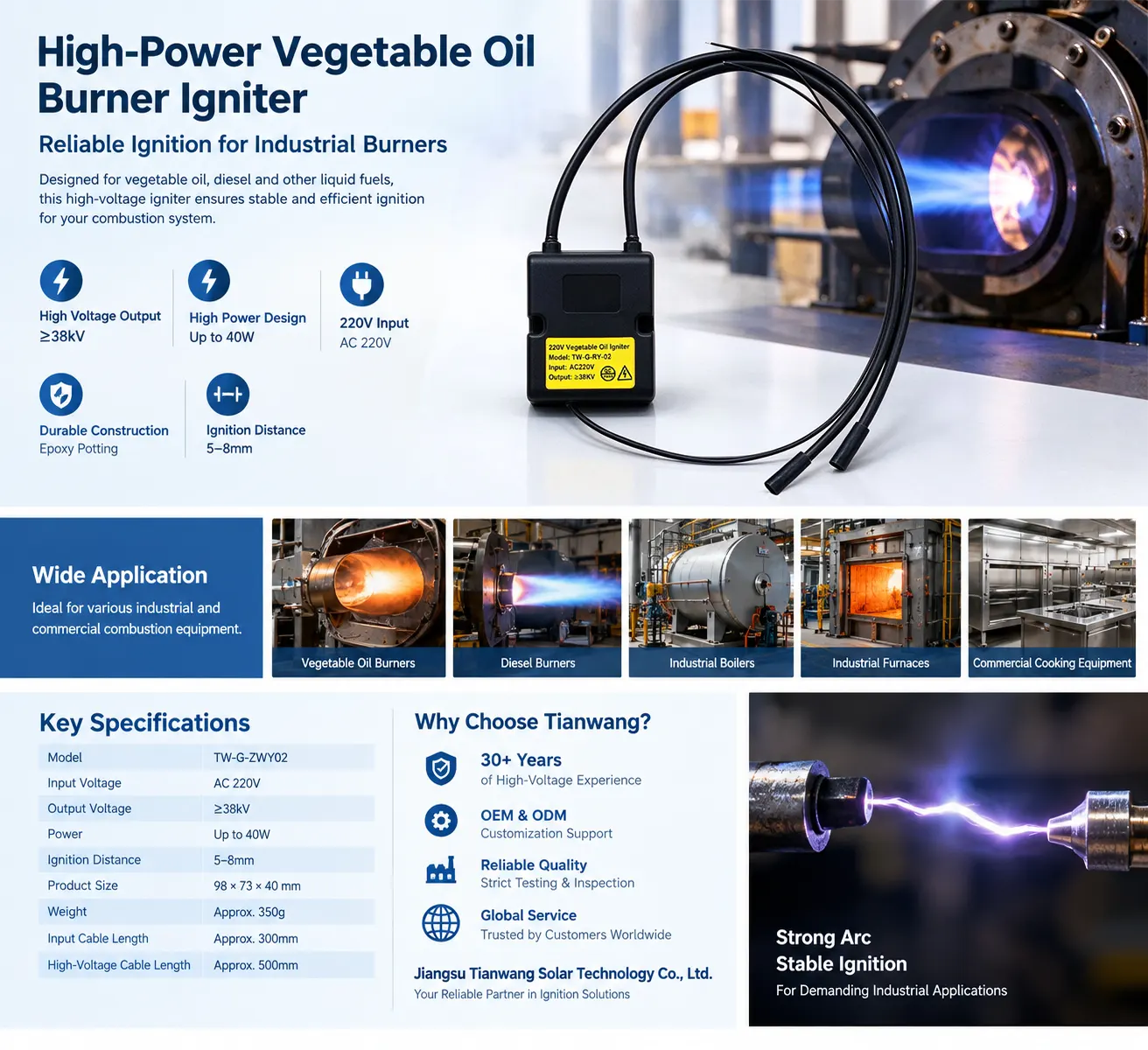
Igniting liquid fuels like vegetable oil and diesel is harder than igniting ordinary gas. Fuel atomization, temperature, and combustion-chamber conditions all affect whether the burner lights reliably. The TW-G-ZWY02 diesel burner igniter is a high-power igniter built for commercial and industrial burners. It runs on 220V AC, delivers ≥38kV at the output, and can draw up to 40W, producing a strong, stable arc to start combustion quickly and consistently.
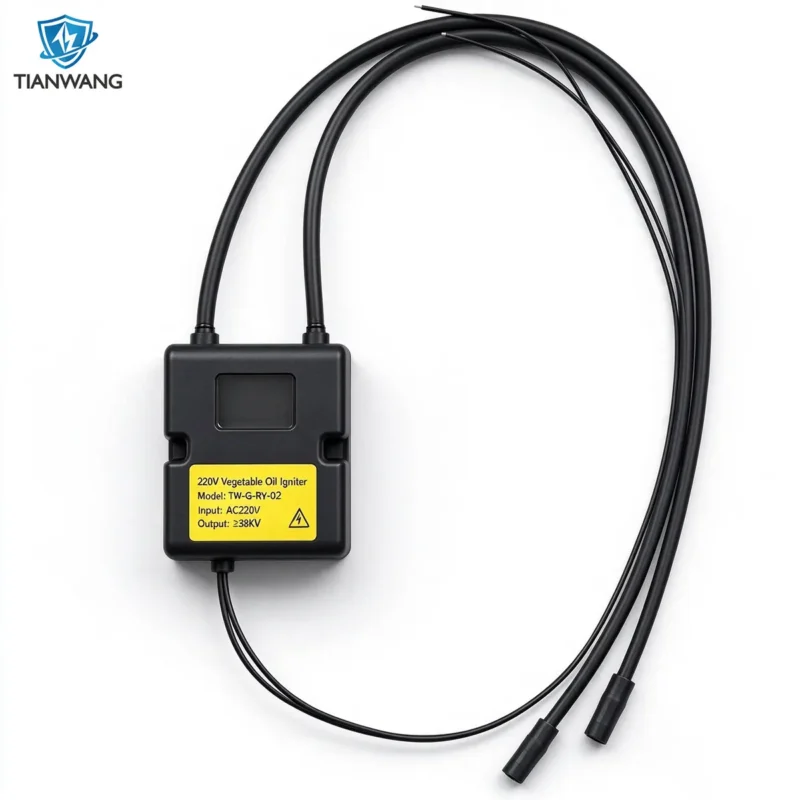
How does diesel burner igniter Works
The igniter steps the 220V supply up to 38kV or more. When that voltage reaches the ignition electrode, it arcs across the electrode gap, and the heat of the arc is what ignites the fuel.
For burner manufacturers, the rated voltage alone doesn’t determine ignition performance. Electrode spacing, fuel properties, atomization quality, burner design, and operating conditions all play a role. So an igniter should be matched to the whole burner system, not chosen by voltage alone.
Why Liquid Fuels Need a High-Power Igniter
Strong, stable high-voltage ignition for reliable startup
Electrode gap of roughly 5–8mm, depending on electrode and burner configuration
Works with different liquid-fuel burner designs
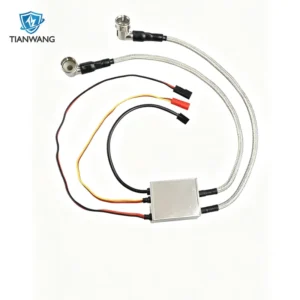
Flexible installation thanks to extended high-voltage wiring
Resists moisture, oil contamination, and vibration
Applications
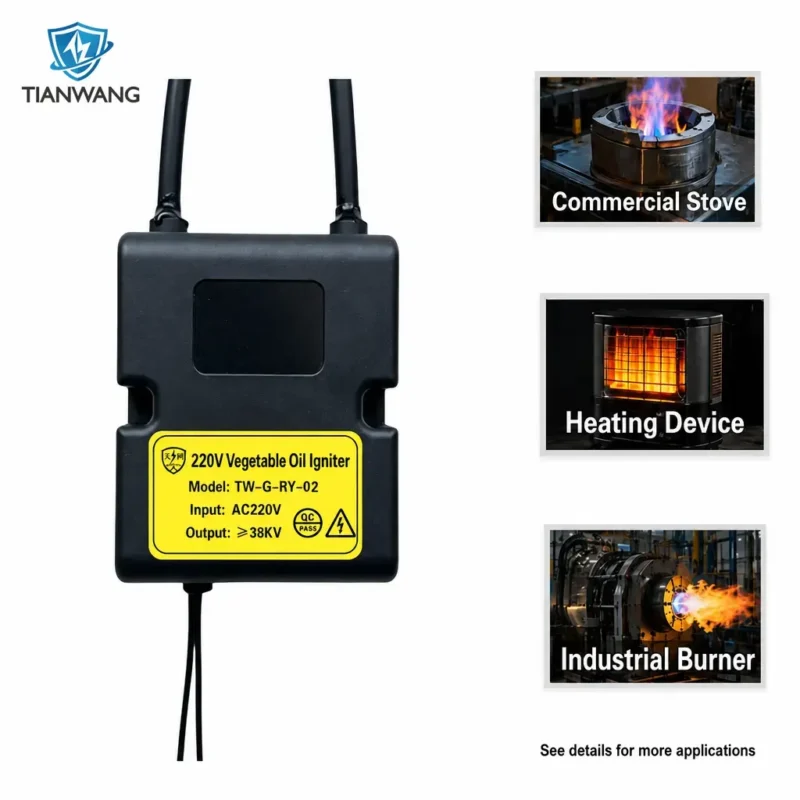
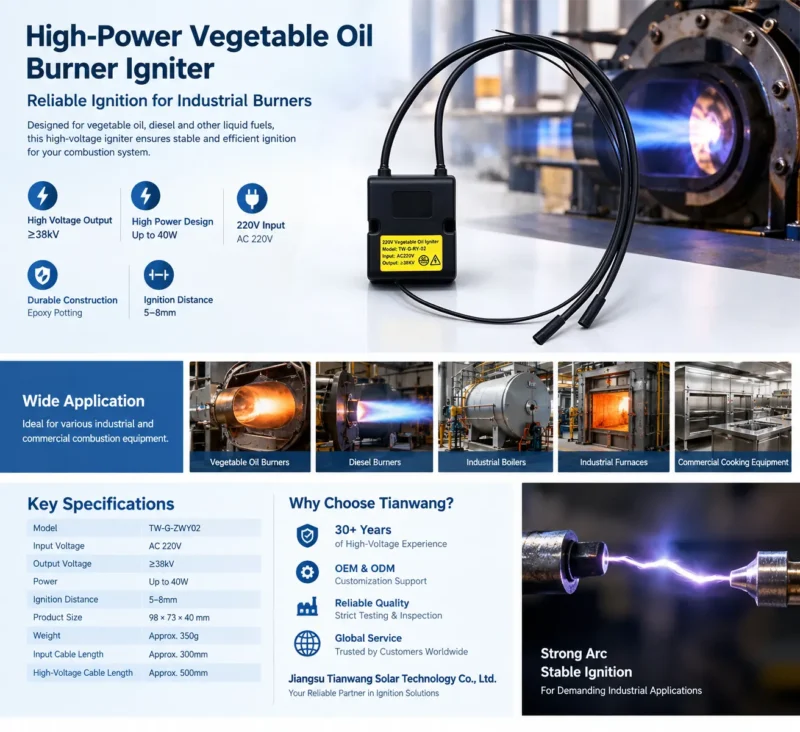
The TW-G-ZWY02 uses standard 220V power and can be fitted into a range of combustion equipment: vegetable-oil burners, diesel burners, industrial furnaces, industrial boilers, commercial cooking equipment, oil-fired heating systems, thermal-processing equipment, combustion chambers, and waste-oil or alternative-fuel burner systems.
Typical Fuels
Vegetable oil – used in commercial heating and cooking. The oil is viscous and harder to atomize, so a sufficiently strong ignition source is essential for reliable startup.
Diesel – generates the high-voltage spark diesel combustion equipment needs. Final performance depends on the nozzle, fuel atomization, electrode arrangement, and combustion-chamber design.
Bio-alcohol and alternative fuels – can be used with certain bio-alcohol and alternative-fuel systems; compatibility should be checked against the specific fuel and burner design.
Key Specifications
| Parameter | Specification |
| Model | TW-G-ZWY02 |
| Input voltage | AC 220V |
| Output voltage | ≥38kV |
| Power | Up to 40W |
| Ignition distance | 5–8mm |
| Dimensions | 98 × 73 × 40mm |
| Weight | Approx. 350g |
| Input cable | Approx. 300mm |
| High-voltage output cable | Approx. 500mm |
Specifications are based on the current product information from Jiangsu Tianwang Solar Technology; actual measured values may vary within the stated testing tolerance.
Epoxy-Potted Construction for Harsh Environments
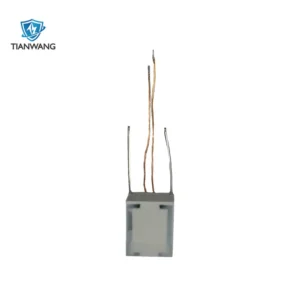
Combustion equipment is often exposed to heat, oil, moisture, and vibration. The TW-G-ZWY02’s internal high-voltage components are encapsulated in epoxy resin, providing electrical insulation plus protection against moisture, oil contamination, and mechanical vibration. This matters most when the ignition transformer is installed near the combustion area or in a spot where exposed electronics would be vulnerable.
Ignition Transformer vs. Igniter
An ignition transformer is the high-voltage transformer that produces the ignition voltage. A complete burner igniter may also include an ignition controller, timer, wiring, connectors, or other control functions. Before selecting a component, confirm whether you need a high-voltage ignition transformer, a complete burner igniter, an electronic ignition module, an ignition controller, or a custom high-voltage ignition assembly. This distinction is especially important when replacing an existing component or developing a new burner.
How to Choose an Industrial Burner Igniter
Don’t look at output voltage alone. Evaluate these together:
Input voltage – is the equipment 110V, 120V, 220V, 24V, or something else?
Required ignition voltage – depends on the electrode configuration, ignition gap, fuel, and burner design.
Ignition gap – the gap directly sets the voltage needed to establish a stable arc. For the TW-G-ZWY02, roughly 5–8mm is recommended.
Ignition duty cycle – short startup ignition, repeated ignition, or longer operating periods.
Installation environment – temperature, moisture, oil, vibration, and available space.
Cable and connector requirements – high-voltage cable length, insulation, connector type, and electrode connection should match the complete burner assembly.
FAQ
Q: Can a diesel burner igniter also ignite diesel?
A: Yes. The TW-G-ZWY02 can spark for both vegetable-oil and diesel burners, as long as the burner’s nozzle atomizes the fuel into a combustible mist first. The igniter supplies the arc; the atomization system makes the fuel ignitable.
Q: What voltage does this igniter provide?
A: 220V AC input, ≥38kV output.
Q: Is it suitable for industrial burners? A: Yes. It is designed for commercial and industrial combustion equipment, including oil burners, vegetable-oil burners, industrial furnaces, boilers, and other burner systems.
Q: What is the ignition distance? A: Approximately 5–8mm; the actual electrode gap should be set per the burner design and ignition conditions.
Q: Can the igniter be customized? A: Yes. OEM/ODM customization can be discussed based on your electrical requirements, installation dimensions, cable configuration, connectors, and application conditions.
Reviews
There are no reviews yet.