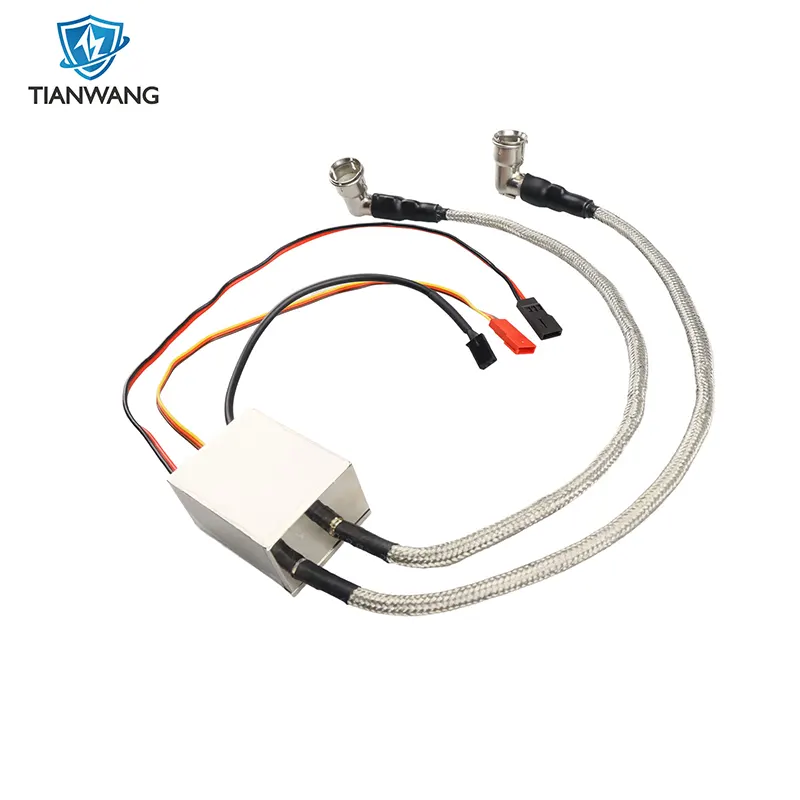
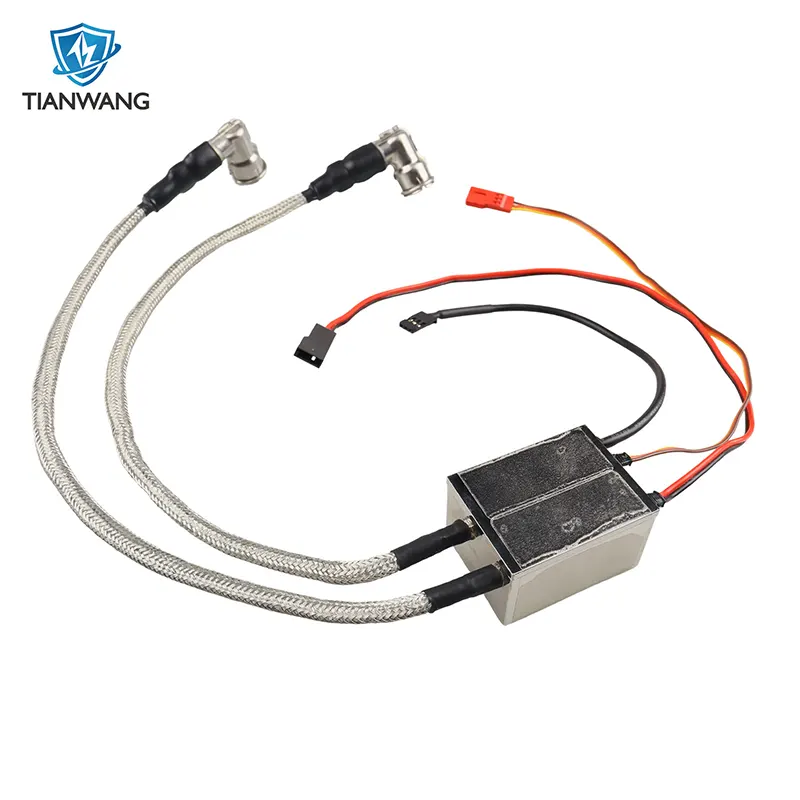
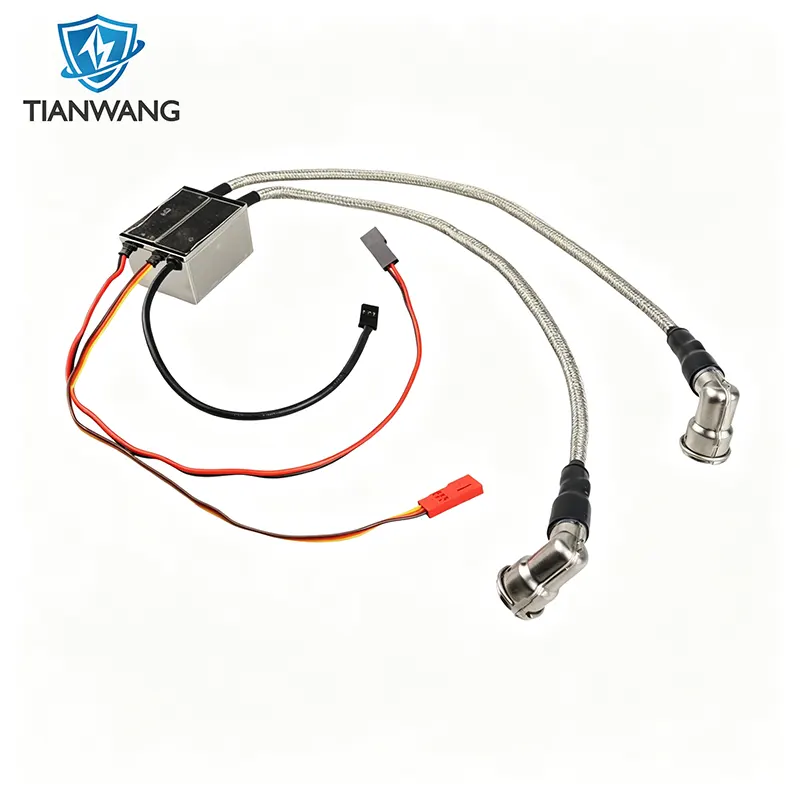
Electronic Twin Cylinder CDI Ignition with Hall Sensor
Our twin-cylinder CDI engine ignition system is professionally developed for civilian 2-stroke gasoline engines. It is widely optimized for RC hobby aircraft, agricultural spraying UAVs, and other compact civilian engine equipment.
Equipped with dual-channel ignition control and Hall sensor position detection technology, the system realizes precise synchronous ignition for twin-cylinder engines. Featuring an electronic ignition design and optional automatic timing advance, it delivers stable high-voltage output, reliable engine start-ups, and consistent long-term performance for hobbyist and commercial agricultural applications.
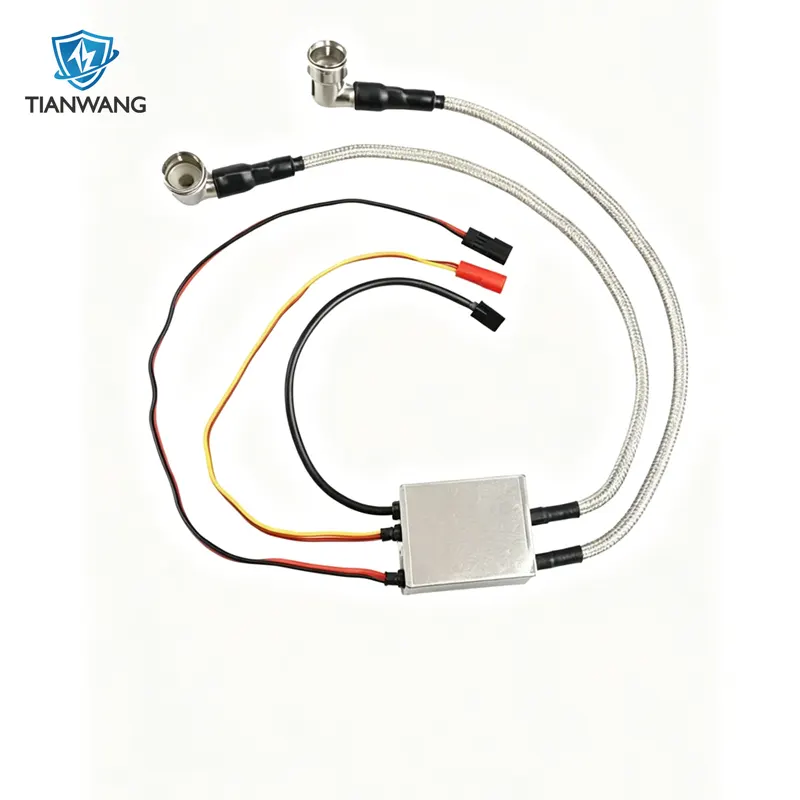
Twin Cylinder CDI Ignition Key Features and Specification
| Product Name | Electronic Twin-Cylinder CDI Ignition with Hall Sensor |
| Product Size | 51.4*39.4*29.2mm |
| Input Terminal | 1.2*150±5mm |
| Output Terminal | 6.0*400±5mm |
| Input Voltage | DC6v~14.4V |
| Output Voltage | ≥18KV |
Dual-channel CDI ignition design, dedicated for twin-cylinder engine synchronous ignition
High-precision Hall sensor for real-time engine rotational position and timing detection
Support automatic ignition timing advance to optimize engine operating efficiency
Specially optimized for 2-stroke twin-cylinder gasoline engines
Stable high-voltage spark output to ensure reliable ignition combustion
Built-in wiring for simplified installation in RC aircraft and civilian UAV kits.
Support full OEM and ODM personalized customization
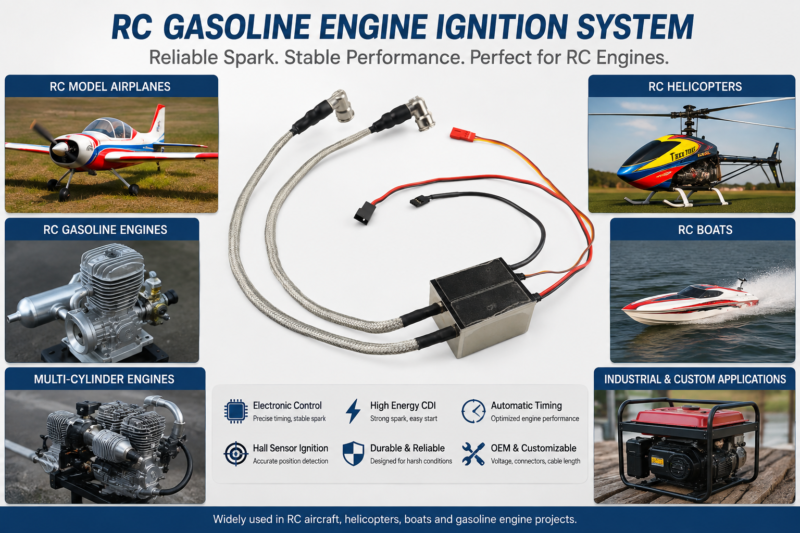
Twin Cylinder CDI Ignition Product Working Principle
The dual-channel CDI ignition system adopts an independent dual-channel control structure, which can separately manage the ignition demand of two cylinders while ensuring the overall synchronous operation of the engine. The CDI circuit stores electric energy and releases instantaneous high voltage to form combustion spark plugs required for gasoline engine operation. Combined with real-time feedback data from the Hall sensor, the controller accurately judges the engine rotation state and calibrates the optimal ignition position in real time. For different engine speed and working condition requirements, the automatic timing advance function can be configured to adapt to diverse operating characteristics and improve engine power performance.
The customizable Hall sensor structure can adapt to different engine installation layouts, realizing accurate ignition timing coordination between two cylinders and effectively avoiding ignition deviation, which is the core guarantee for stable operation of twin-cylinder engines.
Wide Application Scenarios
RC Model Aviation: High-performance gasoline-powered RC airplanes for hobbyists.
Agricultural Technology: Power systems for crop spraying UAVs and forestry protection.
Scientific Research & Education: Custom twin-cylinder engine projects for university labs and technical development.
Engine Compatibility
This ignition system supports customized development for various specifications of 2-stroke twin-cylinder gasoline engines, compatible with mainstream DLE-type twin-cylinder engines and other similar models. To ensure perfect matching, customers need to provide accurate engine models, displacement and ignition parameter specifications before ordering. Adopting a non-universal one-size-fits-all design, we adjust the electrical parameters and mechanical structure of the ignition system according to the actual engine operation and installation conditions.
Twin Cylinder CDI Ignition RFQ:
Q:What is a twin-cylinder CDI ignition system?
A:It is a dedicated electronic ignition system for twin-cylinder gasoline engines, which realizes independent and synchronous spark control for two cylinders through dual-channel electronic timing technology to ensure coordinated engine operation.
Q:Is this ignition system applicable to 2-stroke engines?
A: Yes, it is specially optimized for 2-stroke gasoline engines used in RC hobby aircraft and agricultural UAVs.
Q:Does it support Hall sensor matching and customization?
A:Yes, it supports Hall sensor position detection, and the sensor specification, wiring and installation structure can be customized according to engine needs.
Reviews
There are no reviews yet.